

How to Identify Your Home’s Pipes: Galvanized, Polybutylene, Copper & PEX
A plain-language guide for Salem and Keizer homeowners
How to Tell What Kind of Pipes Your Home Has
The age of a home tells you a lot about the water pipes inside it. Most Salem and Keizer homes built before 1960 started out with galvanized steel. Many homes from the late 1970s through the mid-1990s may contain polybutylene. Copper shows up in homes from many decades, and plastic PEX is what most newer systems use.
We’re a local husband-and-wife team, and we’d rather you understand your plumbing than be surprised by it. Here’s how to take a careful look at your own pipes, with no tools and no cutting.
Look, don’t cut. Check pipes where they’re already exposed: near the water heater, under sinks, in a basement or crawl space, and near the main shut-off or meter. A plumber can confirm the material for you.
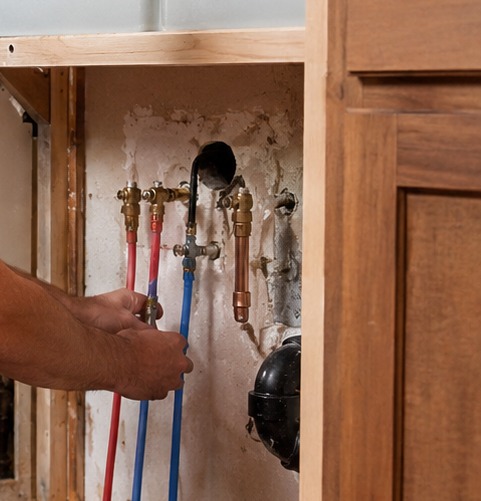
Pipe Types at a Glance
Era ranges are general. Builders, remodels and earlier repairs often mixed materials, so one home can have more than one type.
| Pipe type | Typical era | What it looks like | How to check | Why it matters |
|---|---|---|---|---|
| Galvanized steel | Common in homes built before the 1960s; some use continued as late as about 1990 | Dull silver-gray, threaded fittings, often rusty at joints | A magnet sticks. Scratching lightly shows a shiny silver surface. | Corrodes from the inside, which narrows the pipe. Pressure drops and leaks can follow, often after roughly 40 to 50 years. |
| Polybutylene (PB) | Made from about 1978 to mid-1995 | Usually gray, but also seen in white, silver, black or blue. Often stamped “PB2110.” | Look for the stamp and plastic fittings near the water heater, under sinks and where the line enters the home. | Chlorine and chloramine in treated water can make it brittle over time. Leaks can show up without warning, and insurers often ask about it. |
| Copper | Used for many decades, in homes from the early 1900s to today | Orange-brown when clean, green-blue where oxidized, soldered joints | A magnet does not stick. Look for green crust or tiny weeping spots. | Long-lasting, but pinhole leaks become more likely at 40+ years. Homes built before June 1986 may have lead solder. |
| PEX | Typical for newer installs and repipes | Flexible plastic tubing, often red, blue or white | Bends in long curves, with crimped or clamped metal fittings | Flexible, so installers can often avoid opening walls as much. We explain the trade-offs of PEX and copper before any repipe. |
Where to Look in Your Home
- Next to the water heater, where hot and cold lines are exposed
- Under kitchen and bathroom sinks, including the short supply lines to the fixtures
- Along the joists in a basement or crawl space
- Near the main shut-off and meter, where water enters the home
- Anywhere you see rust, green crust or stains around fittings
Most Homes Have More Than One Kind of Pipe
A 1950s home may have galvanized lines in the walls and copper added during a kitchen remodel. A 1980s home may have copper, polybutylene and plastic fittings in one system. If you see more than one material, pay attention to the oldest section, because that’s the part most likely to cause the next failure.
If you spot galvanized, polybutylene or copper that’s 40+ years old, there’s no need to panic. Many systems keep working for years. But it’s worth having a plumber give you an honest read. We’ll tell you what you have, what’s urgent and what you can watch, and if you need a repipe, you get a clear written quote with no surprises once it’s quoted.
The Swell Way: Honest answers. Clear options. Quality work, every time. No pressure, no gimmicks, no surprise pricing once your job is quoted. That’s how Jason Garsjo runs every job.
Common Questions About Identifying Pipes
Does a magnet really tell me if my pipe is galvanized?
A magnet sticking to a pipe means it’s steel. Galvanized steel is the common steel supply pipe in older homes, so a magnet that sticks is a strong clue. A magnet does not stick to copper, PEX or polybutylene. If you’re unsure, a plumber can confirm.
Is all gray plastic pipe polybutylene?
No. Polybutylene is usually gray but can also be white, silver, black or blue, and some black or white pipes are polyethylene or PVC instead. Look for the stamp “PB2110” and ask a plumber to confirm.
My home was built between 1978 and 1995. Does it have polybutylene?
Not necessarily. Polybutylene was made from about 1978 to mid-1995, so homes from that period may have it, but many do not. It can also be mixed in with copper.
My home is 50+ years old and has copper pipes. Are they a problem?
Not by itself. Copper can last a long time, but pinhole leaks become more likely at 40+ years, and homes built before June 1986 may have lead solder at the joints. A plumber can check for the signs.
Can I identify the pipes inside my walls?
Not safely on your own. Check exposed sections near the water heater, under sinks, in the basement or crawl space and near the main shut-off. A plumber has tools to inspect hidden lines without opening more of your home than needed.
Related Services You May Find Helpful
Find Your Neighborhood Guide
Repiping by neighborhood, Salem:
- Whole House Repiping in Gaiety Hill
- Whole House Repiping in Highland
- Whole House Repiping in Grant
- Whole House Repiping in Court-Chemeketa
- Whole House Repiping in Fairmount Hill
- Whole House Repiping in Candalaria
- Whole House Repiping in Morningside
- Whole House Repiping in West Salem
Repiping by neighborhood, Keizer:
- Whole House Repiping in Keizer 1950s Homes
- Whole House Repiping in Keizer 1960s Homes
- Whole House Repiping in Keizer 1970s Homes
- Whole House Repiping in Keizer 1980s Homes
- Whole House Repiping in Older Keizer Homes
Whole House Repiping · Whole Home Plumbing Inspection · Request a Quote · All Resources
Related guides: Signs Your Home Needs Repiping · What to Expect During a Repipe · Polybutylene Pipes and Home Insurance · Buyer’s Repiping Checklist · For Realtors and Home Inspectors
Get a Written Quote. Fair Price, No Surprises.
Call or request service. Honest answers and a written quote, no surprises. Serving Salem, Keizer and the Willamette Valley.