
Whole House Repiping in Gaiety Hill & Bush’s Pasture Park
Honest guidance and fair, no-surprise pricing for Salem’s historic homes
The Porch Is Original. What About the Pipes?
Gaiety Hill and the Bush’s Pasture Park area hold some of the most-loved streets in Salem. Most of the homes were built between 1878 and 1938: Victorian-era houses, Craftsman bungalows and period revivals with deep porches and original woodwork.
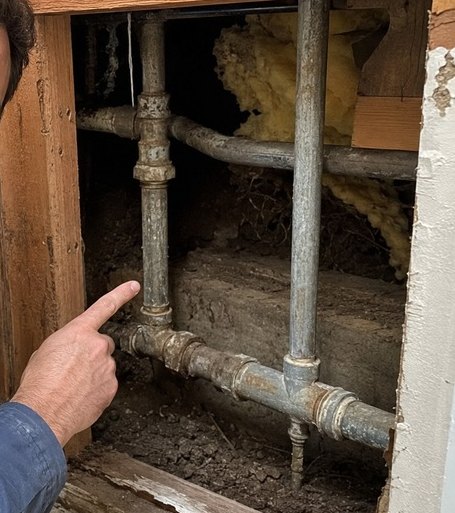
From the sidewalk, you’d never guess what’s going on inside the walls. Many of these homes were built with galvanized steel supply pipe, which usually lasts 40 to 60 years, and most have been remodeled at least once since. It’s common to find old and newer pipe side by side behind the same wall.
We’re Jason and Casey, a local husband-and-wife team here in Salem. Our job is simple: find out what’s really in your walls, tell you plainly where it stands, and quote a fair price for the right fix. Sometimes that’s a small repair. Sometimes it’s a whole house repipe.
What We Often Find Behind the Walls in Gaiety Hill Homes
Every house is different, so the only way to know is to look. Here’s what the age of a Gaiety Hill home usually points to:
- Victorian-era and early 1900s homes (1878 to 1938) that may still have original galvanized steel supply lines
- Craftsman bungalows with updated kitchens and baths but older pipe still inside the walls
- A patchwork of materials, such as galvanized, copper and newer plastic, left behind by remodels over the decades
- Pipes that are 40 to 60+ years old, which is when galvanized steel tends to reach the end of its life
- Original woodwork and plaster that call for careful, planned work
Signs Your Gaiety Hill Home May Be Ready for New Pipes
No guessing needed. These are the things Gaiety Hill homeowners usually tell us first:
- Low water pressure that doesn’t improve after cleaning aerators or checking the main valve
- Rusty or discolored water, especially first thing in the morning
- Leaks that keep moving from one spot to another behind walls or in the basement
- A new kitchen or bath with old pipes still inside the walls
- Stains on ceilings or plaster with no obvious source
- Noisy pipes that bang or squeal when you run water
Fair Price. No Surprises. Here’s How We Do It.
A repipe is a big decision. Nobody should push you into it. We start with an inspection, tell you what we find in plain language and lay out your options. If a smaller fix will solve the problem in your Gaiety Hill home, we’ll say so.
If a repipe is the right call, you get a written quote after the inspection. Once it’s quoted, the price stays put. No surprise charges. Whole house repiping comes with a lifetime workmanship warranty.
The Swell Way: Honest answers. Clear options. Quality work, every time. No pressure, no gimmicks, no surprise pricing once your job is quoted. That’s how Jason Garsjo runs every job.
What a Repipe Looks Like in a Historic Home
1
Inspection & Diagnosis
We check exposed pipes in the basement or crawl space, test pressure and water quality, and look for galvanized steel hiding behind your remodels.
2
Planning Around Your Home
We plan routes that work with your plaster and woodwork, talk through PEX or copper, and give you a written quote.
3
Minimally Invasive Installation
We protect original trim and floors, use the least visible paths and reuse your old pipe routes where we can.
4
Testing & Inspection
The new system is pressure tested and inspected before your water is turned back on.
5
Cleanup & Follow-Up
We clean up the work area and stay available after the job is done. Need drywall repair? We can refer you to a trusted local partner.
Common Questions from Gaiety Hill Homeowners
How do I know if my historic home has galvanized pipes?
Homes from the early 1900s often had galvanized steel supply lines, but many have been updated. A magnet that sticks to an exposed pipe means it’s steel. A plumber can confirm what you have and how old it is.
Will a repipe damage my original woodwork and plaster?
We plan the work to limit wall and floor damage, often by reusing the paths your old lines already follow. Some access is usually needed. We don’t do drywall repair ourselves, but we can refer you to a trusted local drywall partner once the plumbing work is done. We’ll talk through the plan with you before we start.
How much does a whole house repipe cost?
A whole house repipe is a significant investment, typically from about $5,000 to $15,000 or more depending on the size and layout of your home and the materials you choose. You get a detailed written quote after our inspection, and once it’s quoted there are no surprises.
How long will my water be off?
Water is off while the new lines are installed. We’ll discuss the timeline with your quote. We’ll go over the plan with you before we start.
Does a remodeled kitchen mean my pipes were replaced?
Not necessarily. It’s common for fixtures and finishes to be updated while the supply lines inside the walls stay original. An inspection tells you for sure.
What if I only need a repair?
Then that’s what we’ll recommend. We only suggest a repipe when the pipes themselves are failing, not when a smaller fix will work.
Related Services You May Find Helpful
Keep Reading: Repiping Resources for Salem & Keizer
Our services: Whole House Repiping · Whole Home Plumbing Inspection · Salem Service Areas · Request a Quote
Nearby neighborhoods: Highland · Grant
Helpful guides: Pipe Identification Guide · Signs Your Home Needs Repiping · What to Expect During a Repipe · Buyer’s Repiping Checklist · For Realtors & Home Inspectors · Polybutylene Pipes and Home Insurance
All neighborhood guides are in our Resources section.
Get a Written Quote. Fair Price, No Surprises.
Call or request service for your Gaiety Hill home. Honest answers and a written quote, no surprises. Serving Salem, Keizer and the Willamette Valley.